

How to Build a Practical Product Inspection Checklist
Turn quality expectations into a checklist an inspection team can actually follow — appearance, dimensions, function, packaging and clear acceptance criteria.

A product inspection is only as useful as the checklist behind it. When quality expectations stay in someone’s head, two inspectors can look at the same shipment and reach different conclusions. When the expectations are written down as concrete, checkable items, the result is a report you can act on.
This guide explains how to build such a checklist for your products. The same structure works whether you inspect every unit or agree on a sampling plan for larger batches. The product inspection service page explains how an agreed checklist is used for sampling or full inspection.
Start From Your Product, Not From a Generic Form
Generic checklist templates are useful for structure, but the content has to come from your product. The best starting points are:
- The agreed specification — the materials, dimensions and functions you and the supplier signed off on.
- The approved reference sample (sometimes called a golden sample) — the physical baseline that production should match.
- Known risks — problems you have seen with similar products, or details the supplier changed during production.
Requirements that are not documented or represented by an agreed sample are harder to assess consistently.
Appearance and Workmanship
Appearance checks compare the product against the reference sample. Typical items include:
- Scratches, dents, stains or mold marks on visible surfaces.
- Color consistency between units and against the approved sample.
- Print quality and alignment on logos or artwork.
- Seams, joints and finish on assembled parts.
Note which surfaces matter most. A mark on the bottom of the base and a mark on the lid are not the same problem, and your checklist should say so.
Dimensions and Weight
List the measurements that actually affect how the product works or sells:
- The key dimensions a customer would notice, such as overall size or the fit between two parts.
- Weight, where it is part of the product’s promise.
- The tools to be used, such as a caliper or a scale, and where each measurement is taken.
Approximate values are not enough here — the checklist should carry the specific figure and, where relevant, the tolerance you and the supplier agreed on.
Function and Assembly
Functional checks confirm the product does what its instructions say it does:
- The main function operates as described, using the steps in the manual.
- All components and accessories are present.
- Movable parts assemble and operate smoothly.
- Battery contacts, chargers or connectors — where applicable — fit correctly.
For products with a main action (a pump, a switch, a zipper), the checklist can specify that the action is repeated a practical number of times rather than tried once.
Packaging and Labeling
Packaging problems may only become apparent during transit or after delivery, so packaging checks belong on the checklist:
- Cartons are undamaged and correctly sealed.
- Individual units are bagged or protected as agreed.
- Labels and barcodes match the approved artwork, including placement.
- Shipping marks on the cartons match the booking information.
Acceptance Criteria: Deciding Pass or Fail
A checklist also needs rules for interpreting results:
- The reference sample is the baseline. “Same as the approved sample” is a valid standard.
- Defect classification. A common practice is to sort findings into critical, major and minor, so a cosmetic spot and a safety issue are not weighted the same.
- A sampling plan agreed in advance. For larger batches, agree before production how many units will be checked and how results will be judged, so there is no negotiation after the report.
One important boundary: an inspection checklist is not a certification, and it is not a laboratory test. It verifies the product against the criteria you define, on the units that were checked. Claims like compliance marks or material certifications come from separate, documented processes.
An Example Format
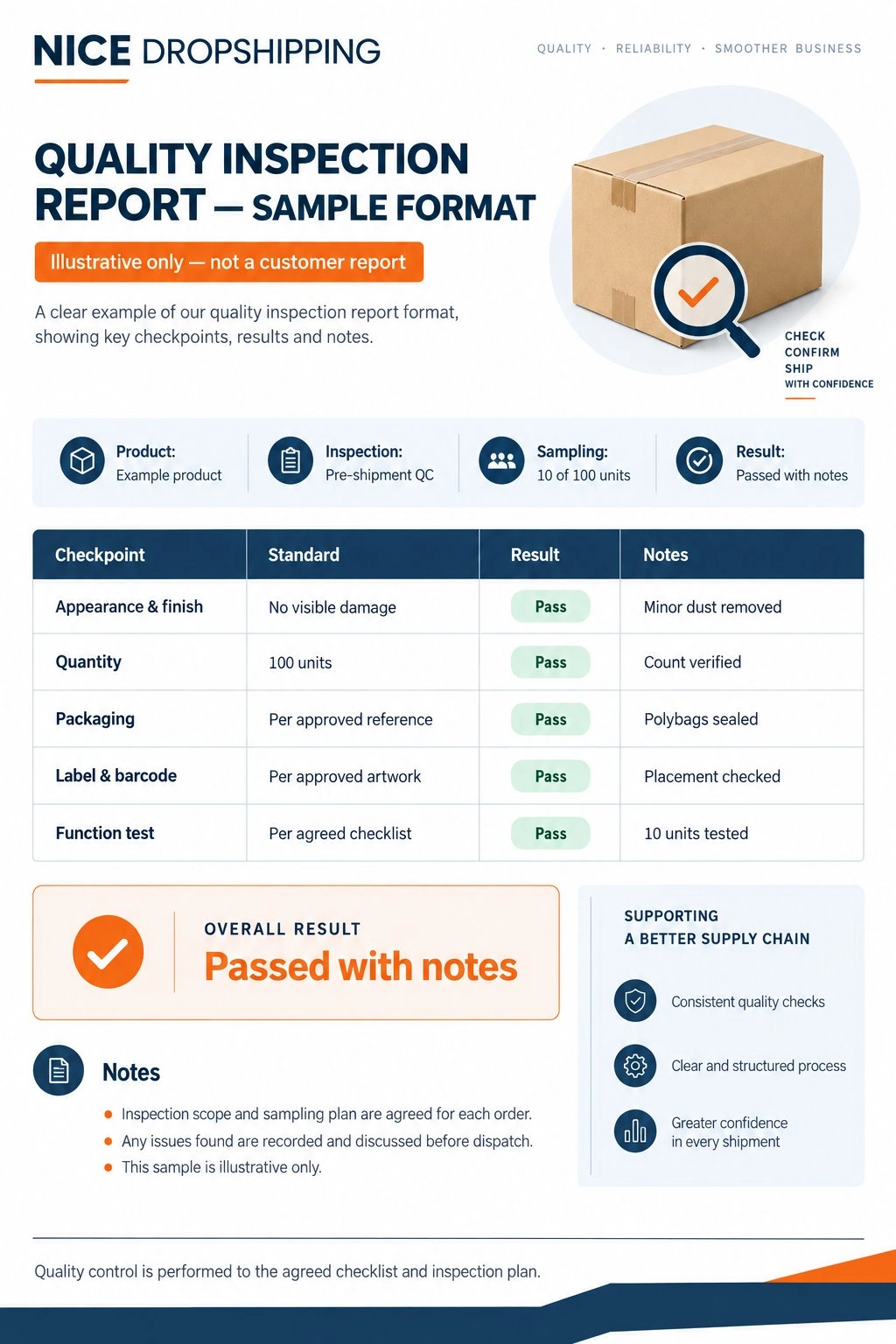
A workable report format stays close to this structure: one row per checkpoint, with the agreed standard, the result, and short notes. The notes column is where an inspection earns its cost — “packaging pass” is less useful than “polybags sealed, carton 3 had two crushed corners, units replaced from spare stock”.
Keep It Practical on the Floor
A checklist is only useful if the people inspecting can work through it in the time they have. Shorter lists tend to be followed more completely, so it is worth cutting wording, merging similar checks and using photos where a written description would be ambiguous.
Length, however, is not the goal — coverage is. Simple products are usually well served by a concise, one-page checklist. Complex products with several components, finishes or functions may need a more detailed checklist, and necessary checks should not be dropped just to keep the document short. What matters is that every item is checkable on the floor, and that the checklist is versioned so everyone knows which revision production is checked against.
The goal is simple: when the report comes back, you can tell at a glance what was checked, against what standard, and whether the shipment matches what you agreed to sell.